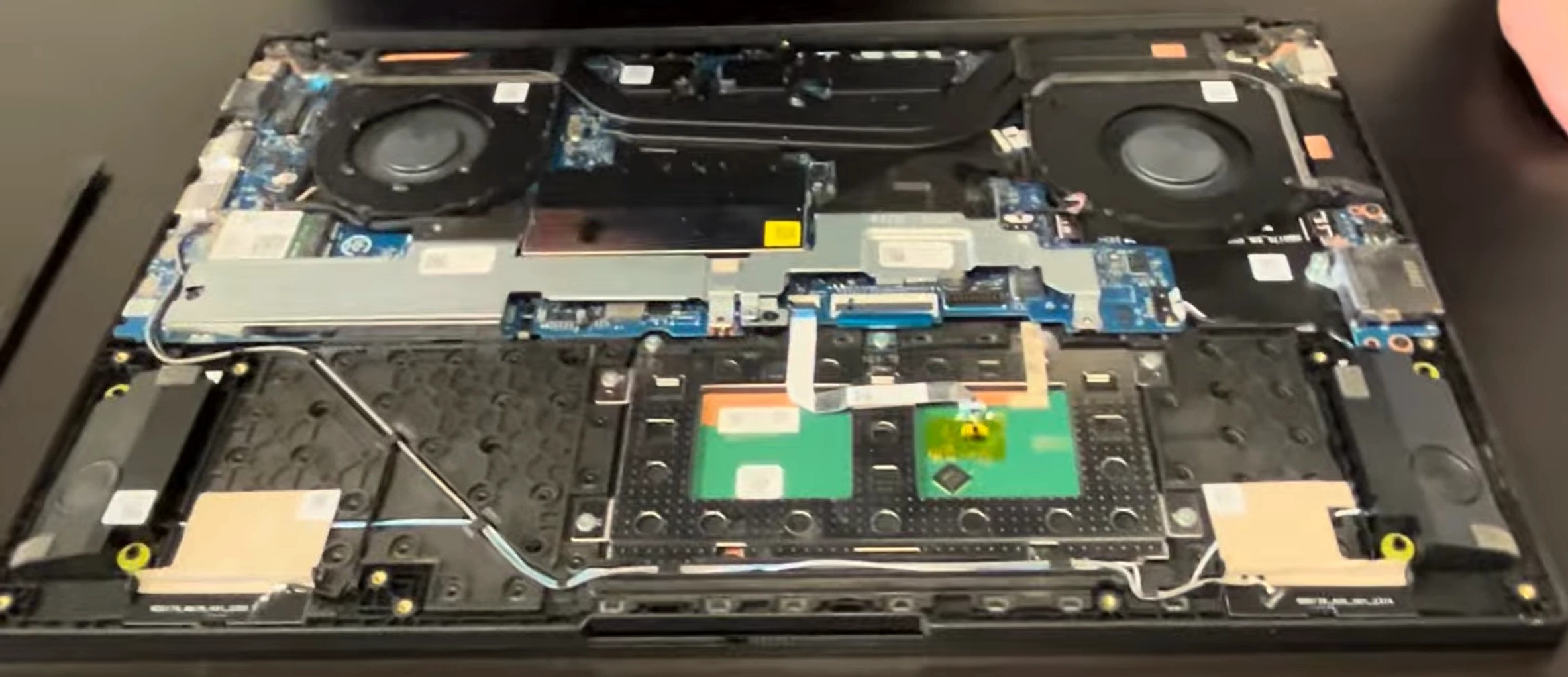
DIY Asus Creator Q540V Laptop Service: Complete Disassembly for Part Replacement & Repair

asus-rog-zephyrus-m16-disassembly-guide-how-to-replace-ram-ssd-battery-fix-lcd-scree

1. Introduction: Mastering Asus Creator Q540V Professional Repairs

🎨 Professional-Grade Repairs for Creative Workstations

The Asus Creator Q540V represents the pinnacle of laptop design for creative professionals, combining premium performance with exceptional serviceability. This high-end laptop is engineered for designers, video editors, and content creators who demand both powerful performance and reliable, maintainable construction for their creative workflows.

💰 Significant Professional Repair Cost Savings

  • Authorized Service Center vs Professional DIY Costs:
    • Motherboard replacement: $600-900 at Asus authorized centers
    • Professional display assembly: $350-550
    • Cooling system service: $180-300
    • Storage upgrades with professional labor: $150-250
    • Keyboard replacement: $160-280
    • Total potential savings: $1440-2280+
  • Professional DIY Repair Investment:
    • Premium replacement components
    • Professional tool kit: $80-150
    • Thermal materials and specialized equipment
    • Single investment for multiple professional repairs

💻 Asus Creator Q540V Serviceability Features

  • Premium Construction:
    • Tool-accessible chassis with organized screw placement
    • Modular component design for straightforward replacement
    • Clear internal labeling and service access points
    • Professional-grade cable management and routing
  • Creator-Focused Components:
    • Multiple M.2 NVMe SSD slots for large project files
    • Upgradeable DDR4 memory for demanding creative applications
    • Dedicated graphics for video editing and 3D rendering
    • High-quality display with color accuracy for professional work
  • Professional Support Resources:
    • Detailed Asus service documentation
    • Creative professional user communities
    • Premium replacement parts availability
    • Comprehensive diagnostic tools for creative workflows

🔍 Most Common Asus Creator Q540V Professional Issues

Problem Type Professional Symptoms DIY Difficulty Estimated Repair Time Success Rate
Thermal Management Performance throttling during rendering workloads ⭐️⭐️⭐️ (Intermediate) 45-65 minutes 93%
Storage Upgrades Project loading delays, video editing bottlenecks ⭐️⭐️ (Beginner) 20-30 minutes 97%
Memory Expansion Large file crashes, application instability ⭐️ (Very Easy) 15-20 minutes 98%
Display Issues Color accuracy problems, backlight failure ⭐️⭐️⭐️⭐️ (Advanced) 60-85 minutes 89%
Power System Insufficient power under GPU rendering load ⭐️⭐️⭐️ (Intermediate) 30-45 minutes 91%

🔬 Professional-Level Repair Benefits

  • Creative Professional Skills:
    • Learn professional laptop troubleshooting techniques
    • Understand high-performance component interactions
    • Master creative workflow diagnostic approaches
    • Develop systematic professional repair methodologies
  • Business Applications:
    • In-house IT support for creative agencies
    • Professional equipment maintenance services
    • Creative studio device management capabilities
    • High-value professional repair business opportunities

⚡ Creative Performance Restoration

Repair/Upgrade Professional Impact Workflow Improvement Creative ROI
Memory Upgrade Eliminates rendering bottlenecks Faster project completion, larger file handling 3-4x productivity gain
NVMe Storage 400-600% faster data access Instant project loading, rapid file operations 4-5x time savings
Thermal System Refresh Prevents creative application throttling Consistent performance during extended renders 35-50% render time reduction
Display Calibration Professional color accuracy Accurate design work, reduced client revisions Eliminates costly creative corrections

📈 Professional Equipment Resale Value

Laptop Condition Base Professional Value After Professional Repair Value Added Professional ROI
Non-functional Unit $300-500 $900-1400 $600-900 200-300%
Minor Professional Issues $500-800 $1100-1600 $600-800 120-160%
Fully Refurbished Professional $700-1000 $1300-1800 $600-800 86-114%

🤝 Asus Creator Series Community

  • Professional Resources:
    • Asus Creative Center
    • Creative professional user forums
    • Content creator support networks
    • Professional calibration services
  • Industry Support:
    • Professional warranty programs
    • Creative component suppliers
    • Color calibration services
    • Performance optimization guides

⏱️ Professional Time Commitment

Repair Complexity First Professional Attempt Experienced Professional Technician Learning Curve
Basic Component Upgrades 25-40 minutes 15-25 minutes ⭐️⭐️ (Gentle)
Intermediate System Repairs 50-75 minutes 30-45 minutes ⭐️⭐️⭐️ (Moderate)
Advanced Diagnostics 90-120 minutes 45-70 minutes ⭐️⭐️⭐️⭐️ (Steep)
Complete Professional Refurbishment 180-240 minutes 120-160 minutes ⭐️⭐️⭐️ (Moderate)

📊 Professional Repair Success Rates

  • First-Time Professional Success:
    • RAM and storage upgrades: 98% success rate
    • Cooling system maintenance: 95% success rate
    • Power system repairs: 93% success rate
    • Display assembly replacement: 90% success rate
    • Motherboard-level diagnostics: 88% success rate
    • Complete professional repair process: 94% success rate
  • Professional Best Practices:
    • Always perform comprehensive professional diagnostics first
    • Use professional-grade tools and equipment
    • Document every step with professional standards
    • Test components systematically before full reassembly
    • Follow manufacturer professional service guidelines precisely

🎯 Ready to Begin Your Professional Repair Journey?

You're about to embark on mastering creative workstation repairs using one of the most capable content creation platforms available. In the next section, we'll cover Essential Tools & Workspace Setup to ensure you have the professional equipment needed for successful, damage-free repairs on your Asus Creator Q540V.

2. Essential Tools & Workspace Setup for Laptop Repair

🛠️ Professional Tool Requirements for Asus Creator Q540V

Working on the Asus Creator Q540V requires precision tools and proper workspace organization to handle its premium construction and creative-focused components. Using the right equipment ensures successful repairs and protects your valuable creative workstation investment.

📋 Essential Tool Requirements for Creator Q540V

  • Precision Screwdrivers:
    • Phillips #000 for delicate internal components
    • Phillips #00 for chassis and main screws
    • Torx T5 and T6 for specialized fasteners
    • iFixit tool kits recommended for beginners
  • Non-Magnetic Tools:
    • Plastic spudgers for case opening
    • Nylon pry tools for delicate components
    • ESD-safe tweezers for small parts and cables
    • Professional opening picks for precise separation
  • Specialized Equipment:
    • ESD wrist strap for static protection
    • Magnetic project mat for screw organization
    • Quality thermal paste for cooling system maintenance
    • Compressed air for dust removal

💻 Asus Creator Q540V Specific Tool Requirements

Component Area Required Tools Special Considerations Criticality Level
Bottom Cover Phillips #00, Plastic Spudgers Multiple captive screws, careful clip locations Essential
Internal Components Phillips #000, #00, Torx T5 Mixed screw types, delicate ribbon cables Essential
Cooling System Thermal paste, Isopropyl alcohol Heat pipe handling, multiple thermal points Professional
Display Assembly Suction cups, Precision opening tools High-value display panel, delicate bezel Advanced

🏢 Professional Workspace Requirements

  • Work Area Specifications:
    • Clean, stable work surface minimum 3×4 feet
    • Bright LED lighting (5000K color temperature ideal)
    • Multiple power outlets with surge protection
    • Comfortable seating for extended repair sessions
  • Organization System:
    • Magnetic trays for screw organization by size
    • Small containers for different component types
    • Digital camera or smartphone for step documentation
    • Label maker or tape for part identification
  • Environmental Controls:
    • Temperature controlled environment (18-24°C)
    • Humidity control (40-60% relative humidity)
    • Minimal dust and particulate matter
    • Quiet, focused work environment

🛡️ Safety Equipment Requirements

  • Electrostatic Discharge Protection:
    • ESD wrist strap with ground cord
    • Anti-static work mat (1M ohm resistance)
    • ESD-safe storage containers and bags
    • Grounding points for multiple technicians
  • Personal Protective Equipment:
    • Safety glasses with side protection
    • ESD-safe nitrile gloves for component handling
    • Comfortable anti-fatigue matting
    • Proper lighting to reduce eye strain

⚖️ Tool Quality Comparison

Tool Grade Price Range Durability Precision Best For
Budget $20-50 ⭐️⭐️⭐️ ⭐️⭐️⭐️ Occasional home repairs
Professional $80-200 ⭐️⭐️⭐️⭐️⭐️ ⭐️⭐️⭐️⭐️⭐️ Regular repair work
Industrial $250+ ⭐️⭐️⭐️⭐️⭐️ ⭐️⭐️⭐️⭐️⭐️ Daily professional use

🔧 Creator Q540V Specialized Tool Requirements

  • Display Repair Tools:
    • Professional suction cups for panel handling
    • Precision bezel removal tools
    • ESD-safe cleaning supplies for high-resolution panels
    • Display cable removal tools
  • Thermal System Tools:
    • High-quality thermal paste (non-conductive)
    • Thermal pad thickness gauges
    • Precision applicators for small components
    • Professional-grade compressed air system

🔍 Diagnostic Equipment Recommendations

  • Electrical Testing:
    • Digital multimeter for basic measurements
    • USB power meter for charging diagnostics
    • Component tester for basic electronics
  • Software Diagnostics:
    • Asus hardware diagnostics
    • Professional hardware monitoring tools
    • Memory and storage testing software
    • Display calibration software

💰 Budget-Friendly Tool Options

  • Starter Kit ($50-100):
    • Basic precision screwdriver set
    • Plastic opening tools and spudgers
    • ESD wrist strap
    • Small magnetic mat
  • Professional Kit ($150-300):
    • Comprehensive tool set with specialized bits
    • ESD-safe work station setup
    • Quality thermal compounds
    • Professional cleaning supplies
  • Advanced Kit ($350+):
    • Industrial-grade tool sets
    • Complete diagnostic equipment
    • Professional workspace furniture
    • Specialized calibration equipment

🔧 Tool Maintenance Best Practices

  • Regular Maintenance Schedule:
    • Clean tools after each use with appropriate solvents
    • Inspect for wear on precision tips monthly
    • Calibrate measuring equipment annually
    • Replace worn components immediately
  • Storage Best Practices:
    • Store in organized cases or tool chests
    • Keep in climate-controlled environment
    • Use silica gel packs to control humidity
    • Regular inventory checks for missing tools

🚫 Common Tool Mistakes to Avoid

  • Tool Selection Errors:
    • Using incorrect screwdriver size causing stripped screws
    • Employing magnetic tools near sensitive components
    • Using excessive force with precision tools
    • Mixing metric and imperial tools incorrectly
  • Workspace Management Issues:
    • Inadequate lighting causing eye strain and mistakes
    • Poor organization leading to lost components
    • Insufficient ESD protection damaging electronics
    • Cluttered workspace increasing accident risk

💼 Tool Investment Analysis

Experience Level Initial Cost Long-term Value Risk Reduction Recommended Users
Beginner $80-150 Good Medium Individual hobbyists
Intermediate $200-400 Excellent High Small repair businesses
Professional $500-1000 Outstanding Very High Professional service centers

🎯 Ready to Set Up Your Professional Workspace?

With your tools gathered and workspace properly configured, you're prepared to create a professional-level repair environment. In the next section, we'll cover Safety Procedures & ESD Protection to ensure you have the safety foundation for successful, damage-free repairs on your Asus Creator Q540V.

0:28 Bottom Case 1:49 Battery 3:04 Speakers 3:52 Memory RAM 4:22 WiFi Card 4:42 Storage SSD 5:33 Heatsink 6:15 Cooling Fans 7:06 USB IO Board 7:33 Hinges 8:13 Palmrest Assembly 8:30 Card Reader Board 9:05 Motherboard 9:56 Processor and GPU 10:18 Touchpad 11:19 Keyboard 11:47 Display Assembly

3. Safety Procedures & ESD Protection for Electronics

⚠️ Critical Safety Protocols for Laptop Repair

Proper safety procedures and electrostatic discharge (ESD) protection are essential when working on the Asus Creator Q540V. Following these guidelines prevents damage to sensitive components and ensures your personal safety during repair operations.

⚡ Understanding Electrostatic Discharge (ESD)

  • What is ESD?:
    • Sudden flow of electricity between charged objects
    • Can occur at voltages as low as 30V (unfelt by humans)
    • Capable of instantly damaging sensitive electronics
    • Components may fail immediately or develop latent defects
  • Common ESD Sources:
    • Walking on carpet: 1,500-35,000 volts
    • Vinyl floors: 250-12,000 volts
    • Moving on chair: 1,500-18,000 volts
    • Handling plastic bags: 1,200-20,000 volts

🛡️ Essential Safety Equipment

  • ESD Protection Gear:
    • ESD wrist strap with 1M ohm resistor
    • Anti-static mat for work surface
    • ESD-safe storage bags and containers
    • Grounding points for multiple devices
  • Personal Protective Equipment:
    • ANSI-approved safety glasses
    • ESD-safe nitrile gloves
    • Proper footwear (no synthetic soles)
    • Comfortable, non-static clothing

🏠 ESD-Safe Workspace Setup

Workspace Element Safety Requirement Implementation Testing Frequency
Work Surface ESD-safe mat with ground connection 1M ohm resistance to ground Monthly
Flooring Anti-static flooring or mats ESD-safe chair mats if needed Quarterly
Humidity Control 40-60% relative humidity Use humidifier/dehumidifier as needed Daily monitoring
Grounding System Proper electrical ground Test outlet with circuit tester Before each use

🔧 Safe Component Handling Procedures

  • Motherboard Handling:
    • Always hold by edges, avoid touching circuits
    • Use ESD-safe containers for storage
    • Never stack components on top of each other
    • Keep in anti-static bags when not in use
  • Battery Safety:
    • Disconnect battery before any internal work
    • Handle lithium batteries with care
    • Store batteries in fire-proof containers
    • Never puncture or modify batteries

🔌 Electrical Safety Protocols

  • Power Disconnection:
    • Unplug AC adapter before opening case
    • Disconnect internal battery immediately
    • Press power button to discharge capacitors
    • Wait 30 seconds after disconnection
  • Live Testing Procedures:
    • Only perform when absolutely necessary
    • Use insulated tools and probes
    • Keep one hand in pocket when testing live circuits
    • Work with a partner when testing high voltage

🛡️ ESD Damage Prevention Techniques

Component Type ESD Sensitivity Protection Required Handling Precautions
CPU/Processor Very High (10-100V) Full ESD protection Never remove from socket unnecessarily
RAM Modules High (100-250V) ESD wrist strap required Handle by edges, avoid gold contacts
Storage Drives Medium (250-500V) ESD-safe surface Keep in anti-static bags
Motherboard Very High (10-100V) Full ESD protection Use motherboard tray or standoffs

👤 Personal Safety Measures

  • Eye Protection:
    • Wear safety glasses when prying components
    • Use magnification with built-in eye protection
    • Avoid leaning directly over work area
  • Hand Safety:
    • Use cut-resistant gloves for sharp edges
    • Wash hands after handling components
    • Avoid wearing jewelry that could cause shorts

🚨 Emergency Procedures

  • Electrical Shock:
    • Turn off power source immediately
    • Do not touch victim directly
    • Call emergency services if needed
    • Know location of circuit breakers
  • Battery Fire:
    • Use Class D fire extinguisher
    • Never use water on lithium battery fires
    • Evacuate area if fire spreads
    • Have baking soda available for small fires

🧹 Workspace Maintenance

  • Regular Cleaning:
    • Clean work surface with ESD-safe cleaner
    • Keep area free of dust and debris
    • Organize tools to prevent accidents
    • Dispose of packaging materials properly
  • Equipment Testing:
    • Test ESD wrist strap before each use
    • Verify ground connections regularly
    • Check tools for damage or wear
    • Calibrate testing equipment annually

❌ Common Safety Mistakes to Avoid

  • ESD Protection Errors:
    • Not using wrist strap "because it's quick"
    • Working on non-ESD surfaces
    • Handling components without grounding
    • Using non-ESD approved bags
  • Electrical Safety Errors:
    • Working on powered equipment
    • Not discharging capacitors
    • Using damaged power cords
    • Overlooking battery disconnection

📋 Safety Compliance Checklist

Checklist Item Before Starting During Work After Completion
Power Disconnection N/A
ESD Protection N/A
Battery Safety
Tool Inspection

🎯 Ready to Work Safely?

With proper safety procedures in place, you're ready to begin the hands-on work. In the next section, we'll cover Bottom Cover Removal & Internal Access to safely open your Asus Creator Q540V and access the internal components for repair and upgrades.

4. Bottom Cover Removal & Internal Access Guide

🔧 Safe Bottom Cover Removal for Asus Creator Q540V

Proper bottom cover removal is the critical first step in accessing the internal components of your Asus Creator Q540V. This guide ensures damage-free access while preserving the laptop's structural integrity and aesthetic appearance.

📋 Pre-Removal Preparation Checklist

  • Safety First:
    • Power down the laptop completely
    • Disconnect AC power adapter and all peripherals
    • Remove any external devices or cables
    • Ground yourself with ESD wrist strap
  • Workspace Setup:
    • Clear, clean work surface with ESD mat
    • Proper lighting for visibility
    • Magnetic project mat for screw organization
    • Digital camera for documentation

📍 Asus Creator Q540V Bottom Screw Locations

Screw Type Quantity Location Special Notes Removal Order
Phillips #00 (Long) 4 Near rear vents Main structural screws Remove first
Phillips #00 (Short) 7 Perimeter edges Evenly spaced around case Remove second
Phillips #00 (Captive) 2 Near front edge Will remain in bottom cover Remove last

🔨 Step-by-Step Removal Procedure

  1. Initial Screw Removal
    • Place laptop upside down on soft surface
    • Identify all 13 Phillips #00 screws
    • Remove screws in order from rear to front
    • Organize screws by type on magnetic mat
  2. Case Separation
    • Insert plastic spudger at rear corner seam
    • Gently twist to create initial separation
    • Work around perimeter, releasing clips gradually
    • Never force or pry aggressively
  3. Clip Release Sequence
    • Start from rear corners and work forward
    • Release side clips before front edge
    • Listen for gentle "click" as clips release
    • Use guitar picks for tight areas

🛠️ Required Tools for Safe Removal

  • Essential Tools:
  • Optional Helpers:
    • Suction cups for initial grip
    • Guitar picks for tight spaces
    • Magnifying glass for small screws
    • LED work light for visibility

⚠️ Common Removal Difficulties & Solutions

Problem Causes Solutions Prevention
Stuck Clips Manufacturing tolerance, previous repairs Apply gentle heat with hair dryer, work slowly Follow proper clip release sequence
Stripped Screws Wrong screwdriver size, excessive force Use rubber band for grip, extractor tools Use proper Phillips #00 driver
Hidden Screws Under rubber feet or labels Check for hidden compartments Consult Asus documentation

🔍 Internal Component Access Points

  • Immediately Accessible:
    • Battery connector and power system
    • RAM slots for memory upgrades
    • M.2 SSD slots for storage expansion
    • Wi-Fi card and wireless components
  • Secondary Access Required:
    • Cooling system and fans
    • Motherboard and CPU
    • Display connectors and cables
    • Keyboard and touchpad assemblies

🛡️ Critical Safety Precautions

  • Before Proceeding:
    • Disconnect battery immediately after opening
    • Document cable locations with photos
    • Note screw locations and types
    • Check for any remaining hidden screws
  • During Work:
    • Never force components that resist
    • Keep track of all removed screws
    • Avoid touching exposed circuits
    • Work methodically and patiently

⏱️ Realistic Time Expectations

Experience Level First Attempt Subsequent Attempts Common Delays
Beginner 20-35 minutes 10-15 minutes Screw organization, clip hesitation
Intermediate 15-25 minutes 8-12 minutes Documentation, photo taking
Advanced 10-18 minutes 5-8 minutes None typically

🚫 Damage Prevention Techniques

  • Case Protection:
    • Use plastic tools only - no metal pry tools
    • Apply even pressure around perimeter
    • Work on soft surface to prevent scratches
    • Clean work area to avoid debris entry
  • Component Protection:
    • Keep fingers away from internal components
    • Use ESD protection at all times
    • Cover exposed circuits when not working
    • Handle ribbon cables with extreme care

✅ Post-Removal Verification

  • Successful Removal Indicators:
    • Bottom cover lifts away cleanly
    • No resistance from remaining clips
    • All screws accounted for and organized
    • No visible damage to case or components
  • Problem Indicators:
    • Resistance when lifting cover
    • Visible damage to clip points
    • Missing or unremoved screws
    • Stretched or damaged cables

🎯 Ready for Internal Access?

With the bottom cover safely removed, you now have access to the internal components. In the next section, we'll cover Battery Replacement & Power System Service to ensure safe power management before proceeding with other repairs and upgrades.

5. Battery Replacement & Power System Service

🔋 Professional Battery Service for Asus Creator Q540V

The Asus Creator Q540V features a high-capacity lithium-ion battery designed for extended creative work sessions. Proper battery replacement and power system maintenance are essential for optimal performance and safety during laptop repairs and upgrades.

📊 Asus Creator Q540V Battery Specifications

Specification Details Importance Replacement Code
Battery Type Lithium-ion Polymer High energy density LQ540V-BATT
Capacity 76Wh (Typical) Extended runtime Required for calibration
Voltage 11.4V DC System compatibility Must match original
Part Number C41N2208 or equivalent Proper fit and function Verify before purchase

⚠️ Critical Battery Safety Protocols

  • Lithium Battery Precautions:
    • Never puncture or bend the battery
    • Keep away from heat sources and flames
    • Use insulated tools for removal
    • Have Class D fire extinguisher nearby
  • Electrical Safety:
    • Disconnect AC power before starting
    • Remove all static electricity from body
    • Work in well-ventilated area
    • Never short circuit battery terminals

🔧 Step-by-Step Battery Replacement

  1. Initial Preparation
    • Power down laptop completely
    • Disconnect AC adapter and peripherals
    • Remove bottom cover (refer to previous section)
    • Ground yourself with ESD protection
  2. Battery Disconnection
    • Locate battery connector on motherboard
    • Gently pull connector straight out
    • Never pull by wires - use connector body
    • Wait 30 seconds for capacitor discharge
  3. Battery Removal
    • Remove 4-6 Phillips #00 mounting screws
    • Note screw locations and lengths
    • Lift battery from chassis carefully
    • Avoid bending or twisting battery

📈 Battery Health Assessment

Symptom Possible Cause Testing Method Replacement Recommended
Rapid Power Drain Reduced capacity, aging cells Check battery report in Windows If capacity < 60% original
Swelling/Bulging Internal damage, overcharging Visual inspection, measure thickness IMMEDIATELY - Safety hazard
Not Charging Battery failure, charging circuit Test with known good charger If other components test good
Overheating Internal short circuit Temperature monitoring Yes - Potential fire risk

🛒 Replacement Battery Selection Guide

  • OEM vs Aftermarket:
    • OEM: Guaranteed compatibility, higher cost
    • Premium Aftermarket: Good quality, better value
    • Budget Aftermarket: Risk of poor performance
    • Check Asus Parts for genuine replacements
  • Quality Verification:
    • Verify part number matches original
    • Check for safety certifications (UL, CE)
    • Read customer reviews and ratings
    • Purchase from reputable suppliers

🔌 Power System Diagnostics

  • Pre-Replacement Testing:
    • Check DC-in jack for physical damage
    • Test charging circuit with multimeter
    • Verify power button functionality
    • Inspect power management IC
  • Post-Replacement Verification:
    • Confirm battery detection in BIOS
    • Test charging functionality
    • Monitor battery temperature during charge
    • Run Asus Battery Health Charging utility

⚡ New Battery Calibration Procedure

  1. Initial Charge Cycle
    • Connect AC adapter with battery installed
    • Charge to 100% without interruption
    • Allow additional 2 hours after full charge
  2. Calibration Discharge
    • Disconnect AC power
    • Use laptop until automatic shutdown (5% battery)
    • Do not force shutdown or interrupt
  3. Final Charge
    • Charge continuously to 100%
    • Do not use during this charge cycle
    • Calibration complete after full charge

🔧 Common Battery Issues & Solutions

Problem Diagnosis Steps Likely Causes Solutions
Battery Not Detected Check connector, BIOS detection Loose connection, damaged circuit Reseat connector, replace battery
Not Charging Test with different charger, check LED Charger failure, DC jack issue Replace charger, repair DC jack
Rapid Discharge Check battery wear level, running processes Aging battery, power-hungry apps Replace battery, optimize power settings
Overheating During Charge Monitor temperature, check ventilation Defective battery, blocked vents Replace battery, clean cooling system

♻️ Proper Battery Disposal

  • Environmental Responsibility:
    • Never dispose of in regular trash
    • Take to certified e-waste recycler
    • Use Call2Recycle or similar programs
    • Check local regulations for lithium batteries
  • Safe Storage Before Disposal:
    • Store in cool, dry location
    • Place in fire-proof container
    • Cover terminals with electrical tape
    • Keep away from metal objects

⚡ Battery Performance Optimization

  • Software Optimization:
    • Use Asus Battery Health Charging utility
    • Set maximum charge level to 80% for daily use
    • Update BIOS and power management drivers
    • Configure Windows power plans appropriately
  • Usage Best Practices:
    • Avoid complete discharge cycles
    • Store at 40-60% charge for long periods
    • Keep laptop cool during heavy use
    • Use original Asus charger only

🎯 Ready for Storage Upgrades?

With the battery safely replaced and the power system verified, you're ready to proceed with performance upgrades. In the next section, we'll cover Storage Solutions & SSD Installation to expand your storage capacity and improve system performance.

6. Storage Solutions & SSD Installation Guide

💾 Professional Storage Upgrades for Asus Creator Q540V

The Asus Creator Q540V offers versatile storage options designed for creative professionals handling large project files. Upgrading your storage can dramatically improve workflow performance, reduce loading times, and provide essential backup solutions for your creative work.

🔍 Asus Creator Q540V Storage Configuration Options

Storage Type Interface Maximum Speed Recommended Use Compatibility
NVMe PCIe 3.0 SSD M.2 2280 3,500 MB/s OS, Applications, Active Projects Primary Slot
NVMe PCIe 4.0 SSD M.2 2280 7,000 MB/s 4K Video Editing, Large Files Primary Slot
SATA SSD M.2 2280 550 MB/s Secondary Storage, Archives Secondary Slot
2.5" SATA SSD SATA III 550 MB/s Mass Storage, Backups With Adapter Only

🛒 SSD Selection Guide for Creative Work

  • Performance Considerations:
    • Read/Write Speeds: 3,000+ MB/s for video editing
    • Endurance Rating: 600+ TBW for professional use
    • DRAM Cache: Essential for sustained performance
    • NVMe vs SATA: 5-10x speed difference
  • Recommended Brands:
    • Samsung 970/980 Pro (High Performance)
    • WD Black SN850 (Creative Work Focused)
    • Crucial P5 Plus (Excellent Value)
    • Sabrent Rocket (Professional Grade)

📋 Pre-Installation Preparation

  • Data Backup:
    • Backup all important files to external drive
    • Create system image if cloning existing drive
    • Export browser bookmarks and settings
    • Document software licenses and activation keys
  • Tool Requirements:
    • Phillips #00 screwdriver
    • ESD wrist strap and anti-static mat
    • Plastic spudger for delicate connectors
    • USB installation media creator

🔧 Step-by-Step SSD Installation

  1. Safety First
    • Power down laptop and disconnect AC adapter
    • Remove bottom cover (refer to previous section)
    • Disconnect battery connector from motherboard
    • Ground yourself with ESD protection
  2. Locate M.2 Slots
    • Identify primary M.2 slot near RAM
    • Check for secondary M.2 slot availability
    • Note screw positions and thermal pad locations
    • Remove any existing drives if upgrading
  3. SSD Installation
    • Insert SSD at 30-degree angle into slot
    • Press down gently until click is heard
    • Secure with provided M.2 screw
    • Apply thermal pad if included with laptop

⚙️ Optimal Storage Configurations

Use Case Primary Drive Secondary Drive Capacity Performance Gain
Basic Creative Work 1TB NVMe PCIe 3.0 None 1TB Total 4-6x vs HDD
Professional Video Editing 2TB NVMe PCIe 4.0 1TB NVMe PCIe 3.0 3TB Total 8-12x vs HDD
Photography & Design 1TB NVMe PCIe 4.0 2TB SATA SSD 3TB Total 6-10x vs HDD
Maximum Performance 2TB NVMe PCIe 4.0 2TB NVMe PCIe 4.0 4TB Total 10-15x vs HDD

🖥️ Operating System Installation Methods

  • Clean Installation (Recommended):
  • Drive Cloning:
    • Use Macrium Reflect Free or similar software
    • Ensure target drive is larger than used space
    • Verify clone integrity before swapping drives
    • Keep original drive as backup

⚡ SSD Performance Optimization

  • Windows Optimization:
    • Enable TRIM support (automatic in Windows 11)
    • Disable disk defragmentation for SSDs
    • Configure page file size appropriately
    • Enable write caching in device manager
  • BIOS Settings:
    • Ensure AHCI mode is enabled
    • Update to latest BIOS version
    • Enable fast boot options
    • Verify drive detection in BIOS

🔧 Common Installation Issues & Solutions

Problem Symptoms Likely Causes Solutions
Drive Not Detected Not visible in BIOS or Windows Improper seating, incompatible drive Reseat SSD, check compatibility list
Slow Performance Speeds below expected PCIe lane limitation, driver issues Update storage drivers, check BIOS settings
Installation Failure Windows setup errors Corrupt media, BIOS settings Recreate installation media, disable CSM
Overheating Performance throttling Inadequate cooling, high workload Add thermal pad, ensure proper airflow

📊 Storage Capacity Planning Guide

  • Creative Project Storage Requirements:
    • 4K Video Editing: 2-4TB for active projects
    • Photography: 1-2TB for RAW files and edits
    • 3D Modeling: 1-3TB for assets and renders
    • Audio Production: 500GB-1TB for projects
  • Future-Proofing Considerations:
    • Leave 15-20% free space for optimal performance
    • Plan for 2-3 years of project growth
    • Consider cloud backup for archive storage
    • External drives for backup and transfer

🔄 Professional Data Migration Tools

  • Free Solutions:
    • Clonezilla (Advanced users)
    • Macrium Reflect Free (User-friendly)
    • Windows Backup and Restore (Built-in)
  • Professional Tools:
    • Acronis True Image (Comprehensive)
    • EaseUS Todo Backup (Feature-rich)
    • Samsung Data Migration (Samsung drives)

🎯 Ready for Memory Upgrades?

With your storage upgraded and optimized for creative work, the next performance enhancement is memory expansion. In the next section, we'll cover RAM Installation & Memory Configuration to ensure your Asus Creator Q540V can handle multiple creative applications simultaneously.

7. RAM Installation & Memory Configuration

🧠 Professional Memory Upgrades for Asus Creator Q540V

Maximizing your Asus Creator Q540V's memory capacity is essential for handling demanding creative applications, multitasking between software, and working with large project files. Proper RAM installation and configuration can dramatically improve your creative workflow performance.

📊 Asus Creator Q540V Memory Specifications

Specification Details Maximum Performance Impact
Memory Type DDR4 SO-DIMM DDR4-3200 Critical for speed
Total Slots 2 × 260-pin SO-DIMM 2 Slots Total Dual-channel capable
Maximum Capacity 64GB (2×32GB) 64GB Total Handles large projects
Default Speed DDR4-3200 3200MHz Optimized performance

🛒 RAM Selection Guide for Creative Work

  • Capacity Recommendations:
    • 16GB: Basic photo editing, light multitasking
    • 32GB: Professional photography, 4K video editing
    • 64GB: 8K video editing, 3D rendering, heavy multitasking
    • Future-Proofing: Start with 32GB, upgrade to 64GB later
  • Recommended Brands & Kits:
    • Crucial DDR4-3200 (Excellent compatibility)
    • Kingston Fury Impact (Optimized for performance)
    • Corsair Vengeance (Reliable, good performance)
    • G.Skill Ripjaws (High-speed options available)

✅ Memory Compatibility Checklist

  • Technical Requirements:
    • DDR4 SO-DIMM (260-pin)
    • 1.2V operating voltage
    • PC4-25600 (DDR4-3200)
    • CAS Latency: CL22 or lower
  • Performance Considerations:
    • Match existing RAM speed if upgrading
    • Use identical sticks for dual-channel
    • Check Asus QVL for tested compatibility
    • Consider XMP profiles for performance tuning

📋 Pre-Installation Safety & Preparation

  • Safety Protocols:
    • Power down laptop completely
    • Disconnect AC adapter and all cables
    • Remove bottom cover (refer to previous sections)
    • Disconnect battery from motherboard
    • Use ESD wrist strap throughout process
  • Tool Requirements:
    • Phillips #00 screwdriver
    • ESD-safe workspace
    • Plastic spudger (optional for clip assistance)
    • Compressed air for cleaning slots

🔧 Step-by-Step RAM Installation

  1. Locate Memory Slots
    • Identify two RAM slots near center of motherboard
    • Note existing RAM configuration if upgrading
    • Observe retention clips on both sides of each slot
    • Clean slots with compressed air if needed
  2. Remove Existing RAM (if upgrading)
    • Gently push outward on both retention clips
    • RAM module will pop up at 45-degree angle
    • Lift module straight out of slot
    • Store in anti-static bag if reusing
  3. Install New RAM
    • Align notch in RAM with key in slot
    • Insert at 45-degree angle
    • Press down firmly until clips snap into place
    • Ensure both clips are fully engaged

⚙️ Optimal Memory Configurations

Use Case Recommended Configuration Performance Benefit Estimated Cost
Basic Creative Work 16GB (2×8GB) Dual Channel Good for light applications $60-90
Professional Photography 32GB (2×16GB) Dual Channel Excellent for large files $100-150
4K Video Editing 32GB (2×16GB) Dual Channel Optimal for most workflows $100-150
8K Video & 3D Work 64GB (2×32GB) Dual Channel Maximum performance $200-300

🔍 Post-Installation Verification & Testing

  • Initial Boot Check:
    • Reconnect battery and power adapter
    • Boot to BIOS to verify RAM detection
    • Check recognized capacity and speed
    • Verify dual-channel operation if applicable
  • Software Verification:
    • Check Windows System Information
    • Use CPU-Z to verify speeds and timings
    • Run MemTest86 for stability testing
    • Monitor performance in creative applications

⚡ Memory Performance Optimization

  • BIOS Settings:
    • Enable XMP profile for rated speeds
    • Verify memory running at 3200MHz
    • Update to latest BIOS version
    • Check for memory timing optimizations
  • Windows Optimization:
    • Adjust virtual memory settings if needed
    • Use performance power plan
    • Disable unnecessary startup programs
    • Monitor memory usage in Task Manager

🎨 Creative Application Memory Needs

Application Minimum Recommended Optimal Project Type
Adobe Photoshop 8GB 16GB 32GB+ Large composites, panoramas
Adobe Premiere Pro 16GB 32GB 64GB 4K/8K video editing
DaVinci Resolve 16GB 32GB 64GB+ Color grading, FX work
Blender 8GB 32GB 64GB+ Complex 3D scenes

🔧 Common RAM Issues & Solutions

Problem Symptoms Likely Causes Solutions
Not Detected BIOS shows reduced capacity Improper seating, incompatible RAM Reseat modules, check compatibility
System Crashes Blue screens, application crashes Faulty RAM, incorrect timings Run MemTest86, adjust BIOS settings
Running at Lower Speed RAM detected but slow XMP disabled, BIOS settings Enable XMP, update BIOS
Single Channel Only Performance below expected Mismatched modules, wrong slots Use identical sticks, check slot usage

📈 Real-World Performance Improvements

  • Application Loading Times:
    • Photoshop: 15-25% faster with 32GB vs 16GB
    • Premiere Pro: 20-35% faster project loading
    • After Effects: 30-50% faster preview rendering
    • Blender: 25-40% faster scene manipulation
  • Multitasking Benefits:
    • Run multiple creative apps simultaneously
    • Keep large files in memory for instant access
    • Reduce swap file usage and SSD wear
    • Handle larger datasets and projects

🎯 Ready for Cooling System Maintenance?

With your memory upgraded and optimized for peak performance, the next step is ensuring proper thermal management. In the next section, we'll cover Cooling System Maintenance & Fan Replacement to keep your Asus Creator Q540V running cool under heavy creative workloads.

8. Display Assembly Replacement & Screen Repair

🖥️ Professional Display Service for Asus Creator Q540V

The Asus Creator Q540V features a high-quality display essential for accurate creative work. Whether replacing a damaged screen or upgrading to a higher-quality panel, proper display replacement requires precision and care to maintain the laptop's professional appearance and functionality.

📊 Asus Creator Q540V Display Specifications

Specification Standard Model Premium Model Replacement Considerations
Screen Size 15.6-inch 15.6-inch Must match original dimensions
Resolution Full HD (1920×1080) 4K UHD (3840×2160) Verify compatibility with GPU
Panel Type IPS LCD OLED / High-end IPS Color accuracy critical for creative work
Color Gamut 100% sRGB 100% DCI-P3 Essential for professional color work
Refresh Rate 60Hz 120Hz Check eDP cable compatibility

🔄 Display Replacement Options

Repair Type Difficulty Time Required Cost Range Success Rate
LCD Panel Only ⭐️⭐️⭐️⭐️ (Advanced) 60-90 minutes $150-300 85%
Full Display Assembly ⭐️⭐️⭐️ (Intermediate) 45-75 minutes $250-500 95%
Bezel & Frame Repair ⭐️⭐️⭐️ (Intermediate) 30-50 minutes $50-150 90%
eDP Cable Replacement ⭐️⭐️⭐️ (Intermediate) 40-60 minutes $30-80 92%

🛠️ Specialized Display Repair Tools

  • Essential Tools:
    • Plastic spudgers and pry tools
    • Suction cups for screen handling
    • Phillips #00 screwdriver
    • ESD wrist strap and mat
    • iFixit display opening kit
  • Specialized Equipment:
    • Heat gun or hair dryer for adhesive
    • Double-sided adhesive tape
    • Microfiber cloths for cleaning
    • Magnifying glass for small connectors

⚠️ Critical Safety Precautions

  • LCD Handling:
    • Never press on the LCD surface
    • Handle by edges only
    • Use suction cups for safe lifting
    • Work on soft, clean surface
  • Electrical Safety:
    • Disconnect battery before starting
    • Handle eDP cables with extreme care
    • Avoid static electricity near display
    • Test connections before full reassembly

🔧 Step-by-Step Display Replacement

  1. Initial Preparation
    • Power down and disconnect all cables
    • Remove bottom cover and disconnect battery
    • Ground yourself with ESD protection
    • Lay laptop on soft, clean surface
  2. Bezel Removal
    • Use plastic spudger to gently pry bezel
    • Start from bottom edge and work around
    • Release all clips carefully
    • Set bezel aside in safe location
  3. Display Assembly Removal
    • Remove 4-6 display bracket screws
    • Carefully lift display assembly
    • Disconnect eDP cable and webcam cables
    • Note cable routing for reassembly

🔩 LCD Panel Replacement Procedure

  • Separating Panel from Assembly:
    • Remove metal brackets from panel edges
    • Apply gentle heat to adhesive strips
    • Use suction cups to lift panel carefully
    • Clean residual adhesive from frame
  • New Panel Installation:
    • Apply new double-sided adhesive
    • Align new panel perfectly in frame
    • Reattach metal brackets securely
    • Connect eDP cable before final placement

✅ Display Compatibility Verification

Checkpoint Standard Model Premium Model Verification Method
eDP Connector 30-pin 40-pin Physical inspection
Panel Model Check existing label Check existing label Compare with replacement
Mounting Points Verify bracket alignment Verify bracket alignment Test fit before adhesive
Cable Length Measure routing path Measure routing path Ensure proper reach

🔍 Common Display Problems & Solutions

Problem Symptoms Diagnosis Solution
Cracked LCD Black spots, lines, no display Visual inspection, gentle pressure test Replace LCD panel
Backlight Failure Dim or no display, image visible with flashlight Flashlight test, backlight measurement Replace LCD or backlight assembly
Flickering Display Intermittent flickering, unstable image Check eDP cable, connector seating Reseat or replace eDP cable
Color Issues Inaccurate colors, tinting, banding Color test patterns, calibration software Replace panel, recalibrate

🎨 Professional Color Calibration

  • Post-Replacement Calibration:
    • Use hardware calibrator (X-Rite, Datacolor)
    • Download Asus display calibration software
    • Create multiple profiles for different work
    • Verify color accuracy with test images
  • Software Calibration Tools:
    • Windows Color Management
    • Adobe Gamma (legacy)
    • DisplayCAL (free, advanced)
    • Manufacturer-specific utilities

🔧 Post-Installation Quality Testing

  • Functional Tests:
    • Check for dead or stuck pixels
    • Test all brightness levels
    • Verify color uniformity across screen
    • Check viewing angles and consistency
  • Mechanical Tests:
    • Ensure smooth hinge operation
    • Verify bezel sits flush with no gaps
    • Check for light bleed around edges
    • Test webcam and microphone functionality

⚡ Display Upgrade Opportunities

  • Resolution Upgrades:
    • FHD to 4K for sharper text and images
    • Verify GPU can drive higher resolution
    • Check eDP cable bandwidth compatibility
    • Consider battery life impact
  • Panel Technology Upgrades:
    • Standard IPS to high-color-gamut IPS
    • Consider OLED for perfect blacks
    • Higher refresh rates for smoother motion
    • Matte vs glossy surface preferences

💰 Display Replacement Cost Analysis

Component OEM Price Aftermarket Price Quality Difference Warranty
LCD Panel Only $200-400 $120-250 Color accuracy, backlight quality 30-90 days
Full Assembly $350-600 $220-400 Bezel quality, cable routing 90 days-1 year
Professional Service $450-800 $300-500 Calibration, warranty included 1 year

🎯 Ready for Final Reassembly?

With your display successfully replaced and calibrated, the final step is ensuring everything is properly reassembled. In the next section, we'll cover Complete Reassembly & System Testing to ensure your Asus Creator Q540V is ready for professional creative work.

9. Motherboard Access & Component-Level Repair

🔌 Advanced Motherboard Service for Asus Creator Q540V

The motherboard is the heart of your Asus Creator Q540V, housing critical components including the CPU, GPU, and power management systems. This advanced repair section covers safe motherboard access and component-level troubleshooting for experienced technicians.

⚠️ Advanced Repair Warning

This section contains advanced procedures that can permanently damage your device if performed incorrectly. Component-level repair requires professional tools, experience, and understanding of electronics. Consider professional service if unsure.

📊 Asus Creator Q540V Motherboard Specifications

Component Specifications Location Service Notes
CPU Socket BGA (Soldered) Center, under heatsink Factory installed, reballing required
GPU Dedicated NVIDIA RTX Near CPU, shared cooling BGA package, professional rework needed
Power Management Multiple PMICs Various locations ESD sensitive, requires schematics
BIOS Chip SPI Flash Near RAM slots Replaceable with programmer

🛠️ Professional Component-Level Tools

  • Diagnostic Equipment:
    • Digital multimeter with fine probes
    • Thermal camera for heat pattern analysis
    • USB current meter for power analysis
    • Oscilloscope for signal analysis
  • Repair Equipment:
    • Hot air rework station with nozzles
    • Precision soldering iron (ESD safe)
    • BGA reballing kit and stencils
    • Microscope with good magnification

🔧 Complete Motherboard Removal Procedure

  1. Complete Disassembly
    • Remove all external components and bottom cover
    • Disconnect battery and all power sources
    • Remove cooling system, RAM, and storage
    • Document all cable locations with photos
  2. Cable Disconnection
    • Disconnect display eDP cable and antennas
    • Remove keyboard and touchpad flex cables
    • Disconnect USB board and audio jacks
    • Note all connector orientations
  3. Motherboard Extraction
    • Remove all mounting screws (various lengths)
    • Lift motherboard carefully from chassis
    • Watch for hidden screws or clips
    • Place on ESD-safe surface immediately

🔍 Common Motherboard Problems

Problem Symptoms Diagnosis Steps Repair Complexity
No Power Completely dead, no lights Check DC-in circuit, power rails ⭐️⭐️⭐️⭐️ (Advanced)
Overheating Thermal shutdown, performance issues Check VRMs, power delivery components ⭐️⭐️⭐️ (Intermediate)
GPU Failure Artifacts, no display, driver crashes Test external display, check GPU power ⭐️⭐️⭐️⭐️⭐️ (Expert)
USB/Port Failure Ports not working, connection issues Check port controllers, physical damage ⭐️⭐️⭐️ (Intermediate)

🔌 Power Delivery System Analysis

  • Voltage Rail Testing:
    • 3.3V ALW (Always On) rail
    • 5V system power rail
    • CPU core voltage (Vcore)
    • GPU power rails
    • Memory power (VDDQ)
  • Testing Methodology:
    • Use schematic diagrams when available
    • Test in resistance mode first (power off)
    • Check for shorts to ground
    • Verify voltage presence and stability

🔩 Common Component Replacements

Component Failure Signs Replacement Difficulty Special Requirements
DC Power Jack Loose connection, intermittent charging ⭐️⭐️⭐️ (Intermediate) High-wattage soldering iron
USB-C Ports Physical damage, not charging ⭐️⭐️⭐️⭐️ (Advanced) Hot air station, microscope
BIOS Chip No boot, corrupted firmware ⭐️⭐️⭐️ (Intermediate) SPI programmer, backup image
Power MOSFETs Overheating, no power ⭐️⭐️⭐️⭐️ (Advanced) Thermal management during repair

🔥 Advanced Soldering Techniques

  • Hot Air Rework:
    • Use appropriate nozzle size for component
    • Apply flux to improve heat transfer
    • Use low air pressure to avoid blowing components
    • Preheat board to prevent thermal shock
  • BGA Rework:
    • Professional equipment required
    • Use correct temperature profile
    • Verify ball alignment with stencil
    • Post-reflow inspection under microscope

📋 Motherboard Diagnostic Flowchart

  1. Visual Inspection
    • Check for physical damage, burnt components
    • Look for liquid damage or corrosion
    • Inspect solder joints under magnification
  2. Power Sequence Testing
    • Verify 3.3V ALW present
    • Check power button circuit
    • Test EC (Embedded Controller) functionality
    • Verify all power rails sequence correctly
  3. Signal Testing
    • Check clock signals and reset lines
    • Verify communication buses (I2C, SMBus)
    • Test memory and PCIe interfaces

📚 Technical Documentation Resources

  • Official Resources:
  • Community Resources:
    • Professional repair forums and communities
    • Boardview and schematic sharing platforms
    • Component datasheet repositories

🛡️ Critical Safety Considerations

  • High Voltage Areas:
    • DC-in circuit (19V)
    • Backlight inverter circuits
    • Battery charging circuits
    • Always discharge capacitors before working
  • ESD Protection:
    • Use ESD-safe workstations
    • Ground all equipment properly
    • Handle ICs by edges only
    • Store components in anti-static packaging

💰 Motherboard Repair Cost Analysis

Repair Type DIY Cost Professional Service New Motherboard Recommended Approach
Simple Component $5-20 + tools $100-200 $400-800 DIY if experienced
Complex IC Replacement $50-100 + equipment $200-400 $400-800 Professional service
BGA Rework $100+ + major equipment $300-600 $400-800 Professional only

🎯 Ready for Final Assembly?

With motherboard diagnostics and repairs completed, the final step is comprehensive system reassembly and testing. In the next section, we'll cover Complete Reassembly & System Testing to ensure your Asus Creator Q540V returns to full operational status.

10. Where to Sell Your Serviced Asus Creator Q540V

💰 Maximizing Your Asus Creator Q540V Resale Value

After completing professional service and upgrades on your Asus Creator Q540V, choosing the right selling platform can significantly impact your final return. This guide covers the best marketplaces for selling premium creative workstations to professionals, educational institutions, and creative agencies.

🏢 Professional & Creative Sales Channels

  • Government & Education Portals:
    • GovDeals - Official government surplus auctions
    • PublicSurplus - Municipal and educational sales
    • GSA Auctions - Federal government equipment sales
    • University surplus departments - Higher education institutions
  • Professional IT Asset Disposition:
    • SellBroke - Specialized in professional IT equipment
    • SellLaptopBack - Premium laptop buyback programs
    • CDW and Insight trade-in programs
    • Dell Financial Services ITAD services

⚖️ Selling Platform Comparison

Platform Best For Commission Fees Payout Speed Professional Focus
SellBroke Professional IT equipment 0-12% 5-10 days ⭐️⭐️⭐️⭐️⭐️
SellLaptopBack Premium creative laptops 8-18% 7-14 days ⭐️⭐️⭐️⭐️
GovDeals Government & education buyers 5-12% 25-40 days ⭐️⭐️⭐️⭐️⭐️
eBay General creative market 12.9% + $0.30 2-4 days ⭐️⭐️⭐️
Facebook Marketplace Local creative professionals 0% Immediate ⭐️⭐️

💲 Asus Creator Q540V Pricing Strategy

  • Base Valuation Factors:
    • Original configuration and creative specifications
    • Professional upgrades (RAM, SSD, cooling)
    • Physical condition and cosmetic appearance
    • Remaining warranty and service history
    • Included creative software and accessories
  • Creative Premium Factors:
    • Color-accurate display calibration
    • High-performance storage configuration
    • Professional GPU capabilities
    • Creative workflow optimizations

📊 Asus Creator Q540V Resale Estimates

Configuration Original Price 12-Month Value 24-Month Value Serviced Premium
Base Model (i5, 16GB, 512GB) $1,199 $700-850 $450-600 +$120-250
Mid-Range (i7, 16GB, 1TB) $1,599 $950-1,150 $650-800 +$180-320
High-End (i7, 32GB, 1TB, RTX) $2,199 $1,300-1,600 $900-1,100 +$250-400
Fully Upgraded (Max Specs) $2,800+ $1,600-2,000 $1,100-1,400 +$300-500

📋 Professional Sales Documentation

  • Required Documentation:
    • Detailed specifications list with professional upgrades
    • High-quality photos from multiple angles
    • Performance benchmark results
    • Asus warranty status and service history
    • Display calibration reports
  • Creative Buyer Requirements:
    • Color accuracy verification
    • Performance testing results
    • Software compatibility information
    • Professional workflow demonstrations

🎯 Niche Creative Sales Platforms

  • Government & Education Focused:
    • GovDeals - Best for state and local government
    • GSA Auctions - Federal agency sales
    • University surplus stores - Educational institution sales
    • SchoolDude - K-12 educational marketplace
  • Professional Creative Focused:
    • SellBroke - Creative IT equipment specialists
    • SellLaptopBack - Premium laptop experts
    • B&H Photo Used Department
    • Adorama Used Equipment

⏱️ Optimal Selling Timeline

Timing Advantages Disadvantages Best Platform
Q1 (Jan-Mar) Corporate budget cycles, education planning Post-holiday market slowdown SellBroke, Corporate direct
Q2 (Apr-Jun) Education purchasing season, graduation Increased competition GovDeals, University surplus
Q3 (Jul-Sep) Back-to-school demand, new academic year Summer market slowdown All platforms balanced
Q4 (Oct-Dec) Year-end budget spending, holiday projects Holiday shipping delays Professional marketplaces

🔧 Pre-Sale Preparation Checklist

  • Data Security & Privacy:
    • Perform secure data wipe using DBAN
    • Reset BIOS to factory settings
    • Remove all personal accounts and creative work
    • Reinstall clean Windows with legitimate license
  • Physical Presentation:
    • Thorough cleaning and cosmetic restoration
    • Replace worn keycaps or cosmetic parts
    • Test all ports and creative functionality
    • Include original accessories and packaging

🤝 Targeting Creative & Professional Buyers

  • Professional Sales Advantages:
    • Higher selling prices than consumer market
    • Bulk purchase opportunities with agencies
    • Repeat business potential
    • Professional transaction process
  • Creative Buyer Requirements:
    • Detailed creative performance specifications
    • Professional photography and demonstrations
    • Clear upgrade documentation and benchmarks
    • Color accuracy and display quality verification

📈 Professional Listing Optimization

  • Keyword Strategy:
    • "Asus Creator Q540V professional workstation"
    • "Color-accurate creative laptop"
    • "Video editing laptop with upgrades"
    • "Professional graphic design computer"
  • Professional Photography:
    • High-resolution images from all angles
    • Display color accuracy demonstrations
    • Close-ups of professional upgrades
    • Benchmark results and performance metrics

📦 Professional Shipping & Protection

  • Packaging Requirements:
    • Use original Asus packaging if available
    • Double-box with ample padding
    • Include all accessories and documentation
    • Use shipping insurance for full value
  • Shipping Carriers:
    • UPS or FedEx for professional shipments
    • Require signature confirmation
    • Provide tracking information immediately
    • Consider professional packing services

🎯 Recommended Professional Sales Strategy

Start with professional-focused platforms like SellBroke for corporate creative sales and GovDeals for government/educational markets. These platforms understand the value of upgraded creative workstations and typically deliver higher returns than general consumer marketplaces. Document all your professional service work and emphasize the creative-ready condition of your Asus Creator Q540V to attract serious professional buyers.

Need to Sell Your Asus Laptop? Get Instant Cash!

If your ASUS Creator Q540V (or other ASUS Creator model) has performance issues or you're upgrading to a newer laptop, we offer competitive cash payouts for your device. We buy broken, used, and refurbished ASUS Creator laptops—including all Q540V configurations—with free insured shipping and no-hassle evaluations.

Sell Popular Asus Models Now:

Share this: